
By the time you request a background check from a candidate, the last thing you want is a delay. Hiring moves fast, and your screening program should keep up, not hold you back.
At this final stage in hiring, many recruiters and HR leaders have a common question: How long do background checks take in the hiring process? On average, it takes one to three business days for an employer to get background check results. But the answer can depend on a range of factors, including source response times, record accessibility, and screening scope. In this article, we’ll break down average background check turnaround times and explain why they vary, so your hiring team knows what to expect.
This overview is designed for employers, HR teams, and hiring managers who want to understand background check timelines and set accurate expectations during hiring. We’ll focus on employer timelines and process expectations, not individual background check status updates.
Key Takeaways
- Background check delays can happen because of missing candidate information, slow response times, and manual records searches.
- Employers can speed up the process by choosing a relevant screening package, communicating transparently with candidates, and working with a reliable screening provider.
- Background checks take one to three business days on average, but this timeline can vary.
How Long Do Background Checks Take for Employment?
Many background checks can be completed in 1 to 3 business days, according to the Society for Human Resource Management. However, that’s an industry standard, not a fixed rule.
In practice, background check turnaround times can vary widely. Some automated checks use electronic databases that return results in minutes. In comparison, manual checks may involve additional outreach, research, and verification, which can take longer.
Why Do Background Check Turnaround Times Vary?
There’s no universal guarantee for a background check turnaround time. That’s because screening is not a one-size-fits-all process. But if your goal is to improve speed and reduce delays, read our guide to reducing turnaround time.
Several factors can affect the turnaround times for background checks, including:
Scope of Check
A basic criminal background check won’t have the same turnaround time as a screening package that also includes education and license verification, complex drug testing, and occupational health screening. The broader the scope of a background check, the more different variables can affect turnaround times.
Common Background Check Turnaround Times
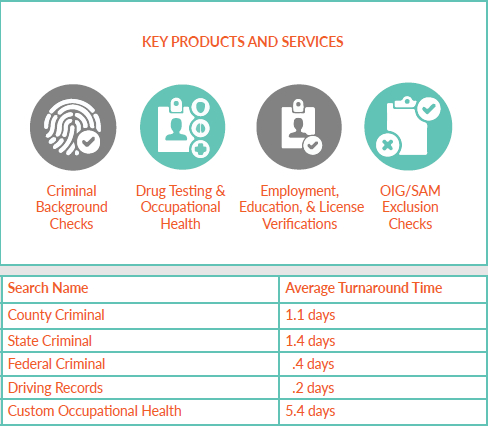
Many background checks involve multiple searches, each of which uses different records and sources. For that reason, background check turnaround times can vary based on which checks you’re running. The table below outlines the average turnaround times for different checks:
| Type of Check | Average Turnaround Time |
| Criminal-only background check | 1 to 2 business days |
| Employment or education verifications | 2-3 business days |
| Custom occupational health screening | 5 to 6 business days |
What Factors Can Cause Background Check Delays?
When a background check gets delayed, it’s usually not because of a broken process. More often, background check delays occur because of a few different factors.
Accessibility of Records
Not every jurisdiction stores its records the same way. Some have electronic databases, while others still require manual searches.
For example, some county criminal searches take longer because records aren’t digitized and must be verified directly at the source. In those counties, a person may need to physically go to the courthouse to retrieve or confirm records for primary source verification, which can affect turnaround times.
Source Response Times
There’s no way to control how quickly past employers, schools, licensing boards, and government agencies respond to background check verification requests. Other factors can also impact source response times, including:
- Holiday or weather-related closures
- Temporary system outages
- Blocked or restricted online access
- Records with limited details
Candidate Information
When a candidate provides missing or incorrect information, it can slow down the screening process. In this situation, the screening provider needs to go back to the candidate to clarify certain data, which may include missing dates, incomplete addresses, or inconsistent identifying information.
Common Names
If a candidate has a common name, like “John Smith,” records may require additional verification to make sure they belong to that person. The extra review can add time, but it helps to improve the accuracy of background check results.
Manual Records Searches
It’s a common misconception that background screening is a fully automated process. In many cases, screening requires external systems and human processes. For example, some counties require courthouse records to be accessed on-site with conventional or manual processing. These manual searches can result in longer turnaround times.
Geographic Scope
Some candidates have records in multiple states or even different countries. Multi-jurisdiction searches can take longer, especially if an international background check is required. Some countries have unique regulations or resource limitations that can extend turnaround times.
Background Check Discrepancies
Sometimes, the information on a background check result doesn’t line up exactly with what a candidate provided. That’s known as a background check discrepancy, and it requires additional review for verification.
For example, employment dates may not match exactly or a license number may be incorrect. When discrepancies occur, they require more research before a screening report can be finalized.
Why Faster Screening Doesn’t Always Mean Better
It’s understandable for employers to want a fast turnaround time for a background check. A delayed background check can lead to missed start dates, a poor candidate experience, and even negative employment outcomes.
At the same time, it’s important to remember that accuracy, not speed, matters most in background screening. A rushed background check that skips essential steps can lead to blind spots and false confidence. In the long run, speed without verification can create more risk for your organization.
How Can Employers Speed Up the Background Check Process?
Fortunately, there are ways that employers can balance accuracy and speed when conducting background checks. Follow these best practices to minimize avoidable delays and create a smoother screening process:
- Match the screening to the role: Not every position requires the same level of screening. Entry-level positions, for example, may only need a basic background check, while regulated or safety-sensitive roles may require more review. Choosing the right scope for the role can help you move faster without adding unnecessary risk.
- Set candidate expectations: Before screening, tell the candidate exactly what information they need to provide and explain the importance of accurate data. Giving clear candidate instructions upfront can remove some lengthy delays later in the screening process.
- Communicate quickly when questions come up: If a candidate or your screening vendor reaches out with a question or clarification, respond as quickly as possible to avoid delays.
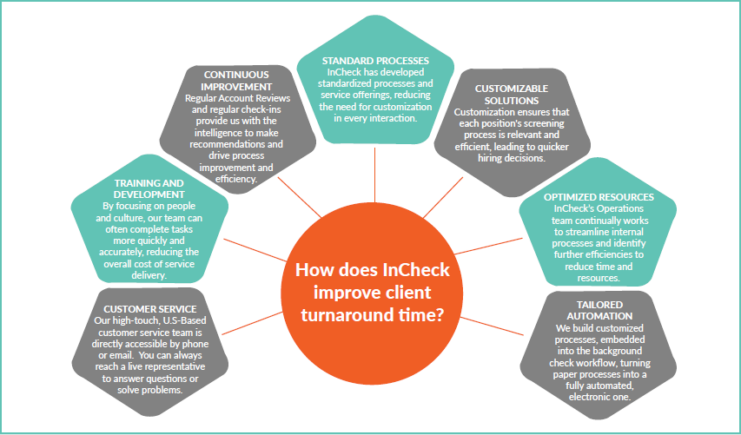
- Choose the right background check provider: When choosing a screening provider, look for one that prioritizes customer service, accuracy, and speed. Ask about average turnaround times, but also inquire about the steps they take to verify information without taking shortcuts.
FAQs About Average Background Check Turnaround Times
Review these answers to some other frequently asked questions about background check turnaround times:
How long should employers expect background check results to take?
Many standard pre-employment background checks take 1 to 3 days to complete, but turnaround times can vary based on scope, record accessibility, verification requirements, and source response times.
Can employers do anything to speed up background checks?
Yes. Employers can help speed up background check turnaround times by choosing the right screening for the role, providing clear instructions to candidates, and responding quickly to questions. Working with the right screening provider can also help employers get faster, accurate background check reports.
Do some background checks come back immediately?
Yes. Some automated background checks that use digital databases can return results within minutes. Other types of screening require manual searches or additional review, which can take longer.
Partner With InCheck for Fast, Accurate Background Checks
Want to take the next step? While some delays might be outside your control, you can take steps to minimize setbacks and create a smoother background screening process that delivers accurate, reliable results.
Partnering with a reputable background screening provider can help your organization achieve the right balance of speed and accuracy. At InCheck, we help employers build screening programs tailored to your business needs. We offer responsive support from a committed team of customer service representatives, and we provide transparent visibility and clear updates when delays occur.
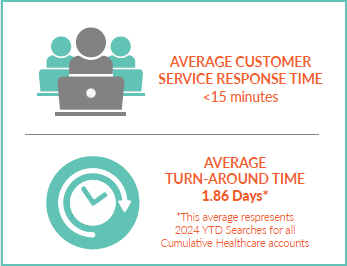
With an average background check turnaround time of under 2 days and a 15-minute average customer response time, we can help your hiring team keep the process moving without sacrificing reliability. Reach out today for more information about partnering with InCheck for fast, accurate, and responsive background screening.