
A candidate may appear qualified and check all the right boxes: A resume listing relevant experience. Polished interview responses. Credentials that look legitimate. Once they start working, however, you quickly realize the person you’ve hired lacks the qualifications to do the job. What happened?
Candidate fraud happens when an applicant intentionally misrepresents their identity or qualifications to get hired. As remote hiring, AI tools, and other factors have led to an increase in this activity, employment fraud prevention has become a necessity for employers.
In this guide, we’ll explain what employment fraud looks like, why it’s increasing, and how employers can prevent it.
What Is Candidate Fraud?
Candidate fraud occurs when someone deliberately misrepresents their identity, work history, or credentials during the hiring process.
To some extent, embellishments in the hiring process have always been a problem. Some studies suggest that as many as one in three people have admitted to lying on their resumes. They may change employment dates, use more impressive job titles, or claim to hold a degree they didn’t complete.
But candidate fraud goes further than exaggerated qualifications or inflated accomplishments. It frequently involves systemic, organized, and technology-enabled deception to gain employment.
Some examples include:
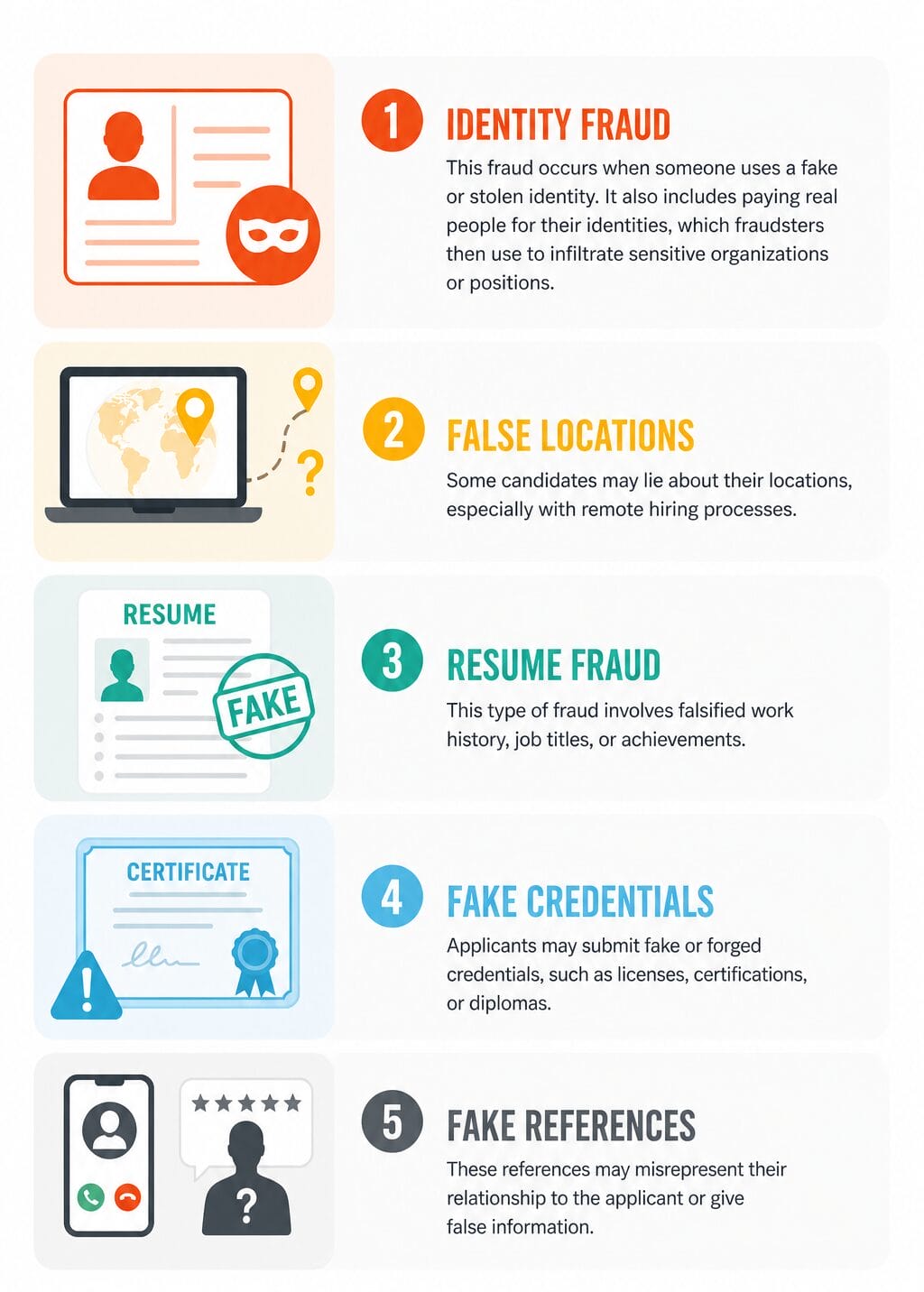
Why Is Employment Fraud Rising?
It’s clear that candidate fraud is increasing. Recent Gartner research now predicts that one in four candidate profiles will be fake by 2028.
This hiring fraud has serious consequences for businesses across industries, particularly in heavily regulated and safety-sensitive sectors. Hiring a fraudulent candidate can lead to data vulnerabilities, security risks, and financial losses.
In one recent case, the U.S. Department of Justice brought charges against North Korean nationals who used false and stolen U.S. identities to gain employment at U.S. companies, where they stole sensitive information and extorted employers for payments.
While this case was highly publicized, it’s certainly not the only example of increasing candidate fraud. A few factors can explain this recent shift:
- Remote hiring: More companies now use remote processes and virtual interviews to hire candidates. When a hiring manager never actually meets a candidate in person, it can make it harder to confirm a candidate is who they say they are.
- AI tools: As artificial intelligence (AI) tools become more sophisticated, they have made it easier for bad actors to misrepresent themselves intentionally. These tools allow people to falsify resumes, script interview responses, and even impersonate others.
- Competitive job market: In a highly competitive market, candidates may use fraudulent practices to make themselves appear more experienced or qualified than they really are.
- Pressure to hire quickly: At the same time, employers are feeling the pressure to fill positions quickly and secure top talent. When this happens, crucial verification steps may be rushed or skipped entirely, which can create blind spots.
At the same time these factors have led to higher rates of employment fraud, it’s also becoming more difficult to catch. In the past, employers uncovered inconsistencies during interviews, reference checks, or background screening. Now, digital platforms can make fraudulent information appear credible and legitimate.
Collectively, this has all made true criminal intent harder to identify. Employers need layered safeguards for hiring, including identity verification and employment, education, and license verification.
While there’s no single way to implement employment fraud prevention, employers can watch for some common red flags during the hiring process:
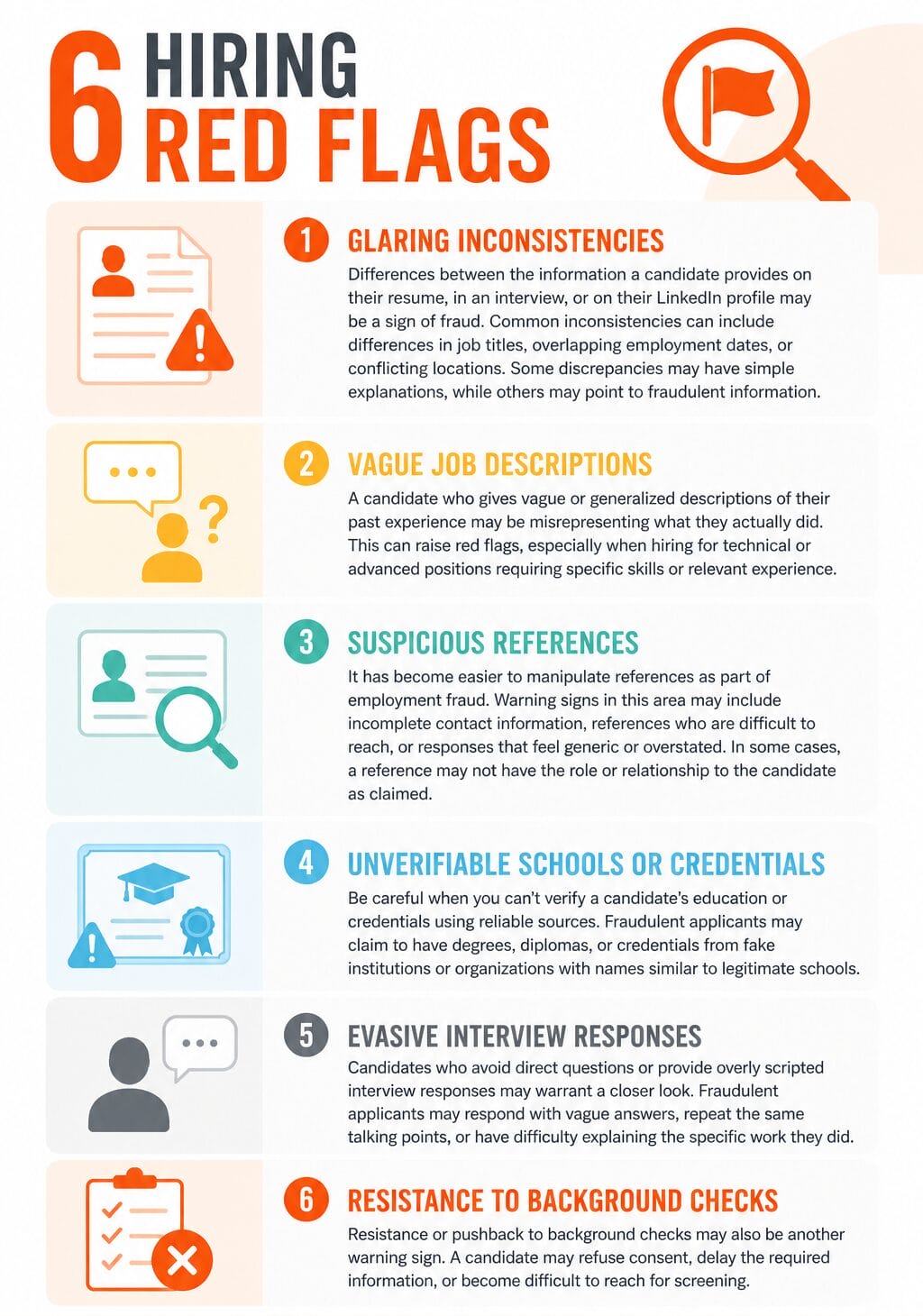
Having a transparent and comprehensive pre-employment screening process can go a long way in preventing employment fraud.
How Employers Can Prevent Employment Fraud
Employment fraud prevention requires a layered approach. Follow these best practices to minimize this hiring risk for your organization:
Evaluate Your Screening Policy
Does your current policy reflect the risks of deliberate candidate fraud with criminal intent? Make sure your screening policy covers required checks by role, when they occur, and how background check discrepancies are handled.
Consider Advanced Verification
Fraud-resistant screening should begin with identity verification for employment. Advanced verification methods include government-issued ID validation, biometric identification, and liveness-detected selfie matches.
Conduct Employment and Education Verification
Employment and education verification can help you confirm what’s on a candidate’s resume or application. Use primary source verification to validate experience and credentials directly with past employers, institutions, or credible databases.
Ask Stronger Interview Questions
Instead of generic or predictable questions, ask interviewees to explain specific projects they worked on, tools they used, or results they saw in previous jobs. These questions make it harder for bad actors to rely on scripted or generalized information.
Verify References Independently
When checking references, make an effort to independently verify a reference’s role or relationship to the candidate, rather than relying on the candidate’s word alone. Consider how much detail a reference is able to provide about the applicant’s work history and track record.
Partner with a Reputable Screening Provider
A knowledgeable background screening company can help you design a screening program to address employment fraud risks. Look for partners that offer identity-first screening workflows with advanced verification methods, as well as thorough criminal background screening, employment and education verification, and licensing checks.
FAQs
What is job candidate fraud?
Job candidate fraud occurs when a candidate intentionally misrepresents their identity, credentials, or experience during the hiring process. Hiring fraud can lead to misspent resources, higher turnover, and safety concerns, as well as security and compliance risks.
How common is candidate fraud?
Unfortunately, two things are happening simultaneously: candidate fraud is increasing, and it’s becoming harder for employers to identify. Research shows that by 2028, around one in four candidate profiles may be fake.
How can my company prevent identity fraud?
It starts with identity verification to make sure the person applying is who they claim to be. Advanced methods can include multi-layered verification with biometrics, liveness-detected selfie matches, and government ID validation.
Build a Fraud-Resistant Hiring Process with InCheck
Employment fraud goes beyond little white lies on a resume. It’s a systemic problem that can create significant compliance risks, security concerns, and reputational damage for organizations. However, there are ways employers can take action against the rise of candidate fraud, including stronger employment identity verification and fraud-resistant screening programs.
At InCheck, we can work with your business to build a background check program tailored to the unique needs of your organization and industry. We offer comprehensive fraud prevention services that include advanced identity verification, social and media screening, an integrated I-9 and E-Verify platform, and personalized support from a knowledgeable team of experts.
If you’re ready to strengthen your employment fraud prevention strategy, reach out today for more information.