
From onboarding paperwork to drug testing, recent federal and state updates may mean it’s time to review your organization’s compliance practices. In this month’s roundup, we explain what to know about Form I-9 enforcement, California’s proposed Fair Chance Act changes, and federal marijuana rescheduling.
Want compliance updates delivered straight to your inbox each month? Sign up for InCheck’s compliance newsletter.
ICE Updates Form I-9 Inspection Guidance
U.S. Immigration and Customs Enforcement (ICE) recently updated its Form I-9 inspection guidance, making some common mistakes more serious violations.
Under the new guidance, some errors that were fixable within a correction period could now lead to immediate fines. These include, but are not limited to:
- Missing date of birth
- Failure to sign or date Section 1
- Missing or incomplete preparer or translator information
- Missing date of hire
- Incomplete document details
These are now substantive violations, which do not have the same correction window as technical errors. Substantive paperwork violations can result in fines ranging from $288 to $2,861 per violation.
What Employers Need to Know
This update is a good reminder to review your I-9 process for onboarding with these steps:
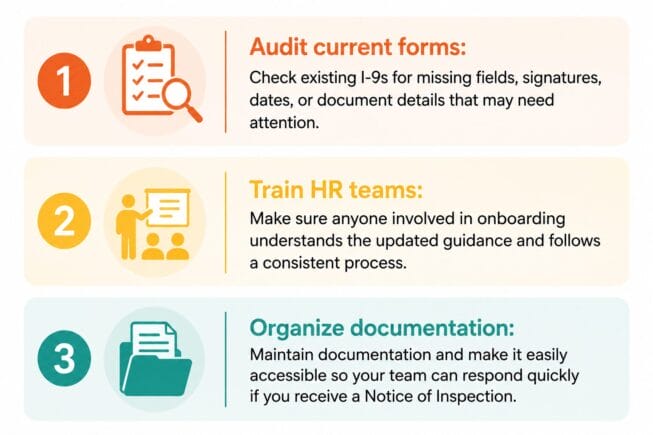
California: Proposed Bill Would Tighten Fair Chance Act Requirements

California lawmakers have proposed significant changes to the state’s Fair Chance Act, which restricts when and how employers can consider criminal history in hiring decisions.
Under the current law, California employers cannot ask about or consider an applicant’s conviction history until making a conditional offer. If an employer considers criminal history as a reason to deny employment, they must conduct an individualized assessment, notify the applicant, and give the applicant time to respond.
The proposed bill would tighten those requirements for employers. The changes outlined in Assembly Bill 2095 would, among other things:
- Require employers to give applicants a list of job duties before requesting consent for a criminal background check.
- Prohibit employers from requiring applicants to self-disclose conviction history.
- Require employers to do a written individualized assessment, reasonably and in good faith, when considering adverse action based on conviction history.
- Require employers to provide the written assessment to applicants when considering adverse action.
- Give applicants additional time to respond if they dispute the criminal background check report.
What California Employers Need to Know
The proposed bill is currently going through the legislative process, so employers don’t need to make any changes yet. However, California businesses with five or more employees should follow legislative updates and prepare for potential changes if it becomes law.
If you’re a California employer, consider taking these steps to prepare:
- Review your current policy: Clearly outline when to conduct criminal background checks in the hiring process.
- Maintain documentation: Have a process for documenting adverse action notices. Consider documenting individualized assessments in writing as well.
- Identify relevant job duties: Take the time to identify job duties that may be relevant when assessing criminal history for specific roles. This process can promote fairness and consistency when conducting individualized assessments.
DOJ Reclassifies Some Marijuana Products Under Federal Law
The U.S. Department of Justice recently changed how some marijuana products are classified under federal law. The order places FDA-approved marijuana products and products regulated by a state medical marijuana license in Schedule III of the Controlled Substances Act.
However, this change is limited in scope. It does not mean that all marijuana products have moved to Schedule III. Many products, including marijuana products outside approved medical use, remain Schedule I under federal law.
Schedule I substances are considered to have no accepted medical use and a high potential for abuse, while Schedule III drugs have a lower potential for abuse or dependence.
The federal government is reviewing whether marijuana should be moved more broadly from Schedule I to Schedule III. A hearing on that issue is scheduled to begin on June 29.
What Employers Need to Know
For employers, this update may affect drug testing policies, especially in states with medical marijuana programs. At this point, you may want to take these actions:
- Review drug testing policies: Ensure your current policy addresses medical marijuana use and state-specific requirements.
- Follow Department of Transportation requirements: In DOT-regulated industries, continue to follow current drug testing rules.
- Monitor guidance: Continue to monitor federal and state updates for the latest guidance as the rescheduling process continues.
Build a Compliant Screening Strategy with InCheck
For HR and hiring teams, these updates may affect several parts of your hiring process, including Form I-9 documentation, criminal history checks, and workplace drug testing policies.
Partnering with a trusted background screening provider can help you manage these changing compliance requirements. InCheck can work with your business to build a screening program that’s consistent and customized to your hiring needs. Contact us to learn how we can help your organization navigate changing requirements with confidence.